
BOP Release Status Meaning
The BOP Inmate Locator covers federal inmates from 1982 to the present. A result may identify an institution, show a release date, or use wording such as Released or Not in BOP Custody. The BOP record explanation makes the scope clear: a release date describes BOP custody and may not explain what happened next. Another agency could take custody. A person could also begin court-ordered federal supervised release after leaving prison.
No BOP prison is physically located in Bonner County. The system belongs in the facility map because a person arrested locally can enter federal custody, serve a sentence elsewhere, and later return to northern Idaho. Bonner’s current jail report stops tracking the person after a federal transfer.
| Locator result | What it supports | What it cannot prove |
|---|---|---|
| Named institution | Displayed BOP placement | Bonner jail custody |
| Released with date | BOP custody ended on that date | End of every hold |
| Not in BOP custody | No current BOP confinement shown | Community freedom |
Search Bonner Federal Releases
The locator accepts a federal register number or identifying name information. A register-number search is the strongest match. For a name search, compare every displayed identifier because common names can produce several people. Never choose a result from the name alone.
- Open the official BOP locator and select number or name search.
- Use the register number when known.
- Otherwise enter the full legal name and available identifying fields.
- Record the exact status, location, and release date shown.
- Check the federal court docket or counsel for legal context.
“Not in BOP custody” does not prove that no other agency holds the person.
A no-result response also has limits. An alias, spelling difference, older record, USMS pretrial placement, or system delay may explain it. State only that the named system returned no match for the inputs used.
BOP Release Record Fields
Results generally provide a register number, name, age, race, sex, release date, and location or custody wording. Quote the release date with its displayed status. Do not transform it into an Idaho parole date, Bonner jail exit, or final end of a federal sentence.
- Register number
- The best public identifier for matching a federal record.
- Release date
- The date shown for the end of BOP custody, subject to BOP cautions.
- Location
- The current institution or placement displayed.
- Not in BOP custody
- A limited statement about federal prison confinement.
The manifest contains a direct BOP match. The official number and name search shown below illustrates both search paths.
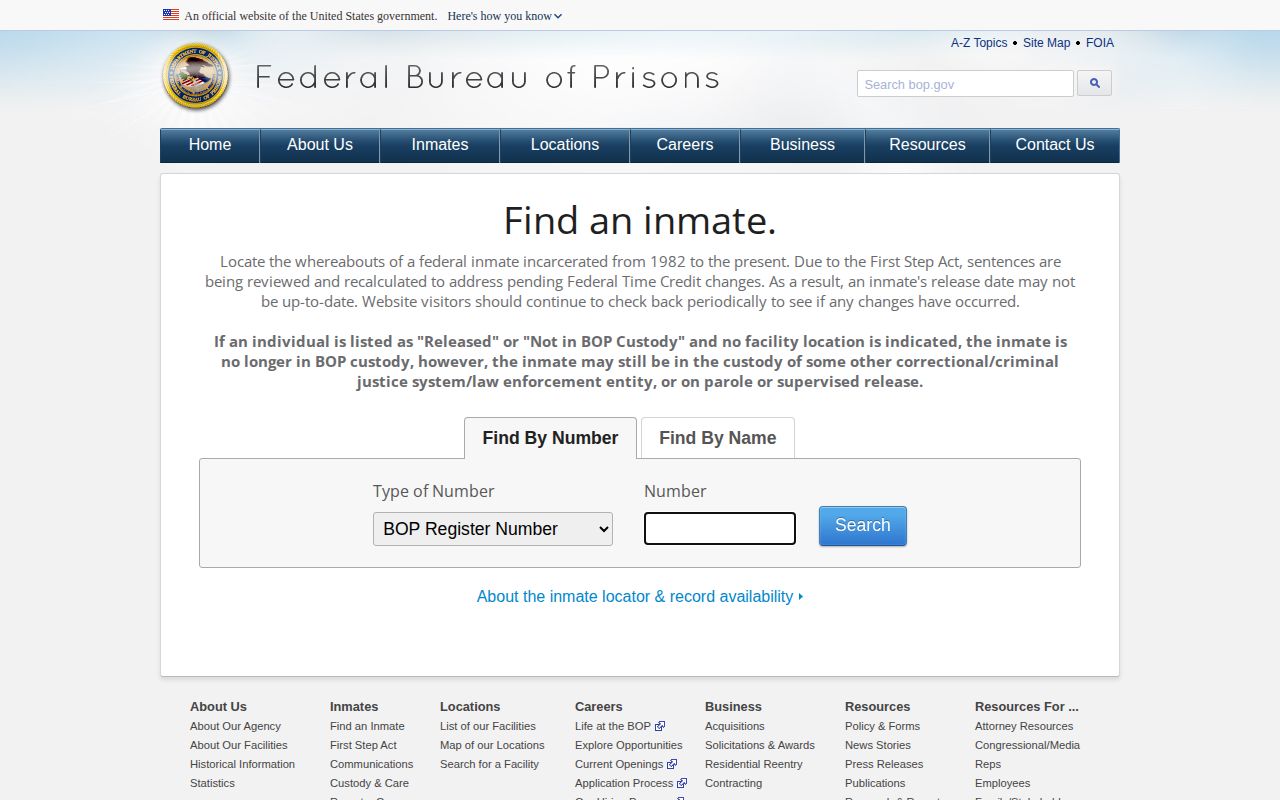
The screen starts the lookup; the result details and court case establish identity and meaning.
From Bonner Jail to BOP
A name leaving the Bonner County Sheriff’s current list does not establish a federal prison admission or community release. Request the Sheriff’s actual disposition and destination. A destination naming the U.S. Marshals Service usually points to federal pretrial, transport, or court custody rather than immediate BOP designation. The USMS prisoner operations page describes that role.
USMS has no public person locator comparable to BOP. A gap can therefore exist between the Bonner booking and a later BOP result. Use the federal court docket, defense counsel, or the responsible district office to bridge it. Once BOP shows the person, preserve the register number for later searches.
Bonner Federal Transfer Timeline
A federal custody history can have several custodians, and each one records a different event. Bonner County Sheriff’s Records can document when the local booking ended and whether the disposition named a federal receiving agency. The federal court docket can show an initial appearance, detention order, plea, judgment, or dismissal. USMS manages many pretrial placements and movements. BOP generally becomes the useful public locator after a sentenced person enters its system. This sequence explains why a person may vanish from the county list yet remain absent from BOP for a time.
Build the timeline from dated records instead of treating the first missing roster entry as a release. Start with the Bonner booking number and federal case number. Keep the Sheriff’s actual release or transfer time separate from a USMS movement date, BOP admission, and later BOP release date. If the federal case ends without a BOP sentence, the BOP locator may never become the right source. Counsel and the federal court remain the sound route for that pretrial or case-ending event.
A Bonner-to-USMS handoff ends county custody, but it does not establish release into the community.
No federal prison or BOP institution was identified in Bonner County. A locator result naming a facility elsewhere is not evidence that BOP operates the local jail. It shows why the federal system is part of the Bonner release path: a local arrest or resident may pass through federal custody far outside northern Idaho.
After BOP Custody Ends
Federal supervised release is managed by the U.S. Probation Office under a federal judgment. It is not BOP imprisonment, Idaho parole, or Bonner County misdemeanor probation. A BOP release date may mark the start of that court supervision. Only the judgment and responsible probation office establish its terms and duration.
If another agency takes custody at the BOP endpoint, use that agency’s record. ICE’s locator can show certain current or recently released immigration records. IDOC applies only when Idaho correctional jurisdiction exists. A Bonner Sheriff record applies only to a county booking. One system’s release does not settle every other system.
| Next event | Verification source |
|---|---|
| Federal supervised release | Federal judgment and U.S. Probation |
| ICE transfer | ICE locator and ERO |
| Idaho custody | IDOC Resident/Client Search |
| Local booking | Bonner Sheriff record |
Federal Release Documents
When the locator is not enough, identify the federal case, sentencing court, register number, and institution. Ask BOP or the court for an existing document, not a custom conclusion. The judgment, commitment record, and release-related material can answer different parts of the history. Privacy and security rules may limit disclosure.
The second BOP manifest image fits this question. The official explanation shown below illustrates why Released and Not in Custody require care.
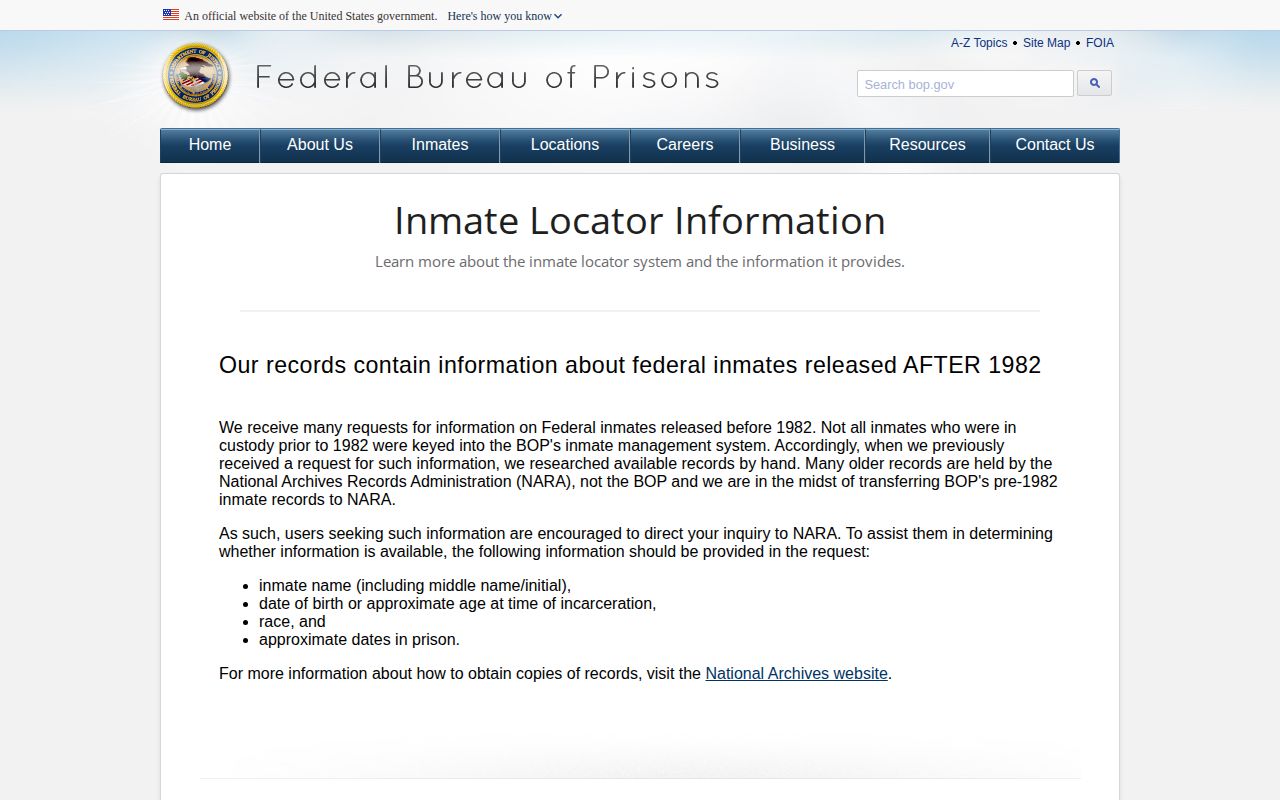
The explanation confirms the narrow federal meaning and supports checking the next custodian.
The Bonner County release search covers the county-side record when the path began locally. A Sheriff transfer date, USMS movement, BOP admission, BOP release, and start of supervision are separate events. Note: Attribute each date to its source and never merge the sequence into one release.
Reconcile Federal Release Dates
BOP cautions that a projected release date can change when a federal sentence is recalculated. Treat a future date as current planning information, not a completed event. When the displayed date passes and no institution is shown, BOP explains that the person was released from its custody on that date. Preserve the date on which the locator was checked because a later result may reflect updated sentence calculations.
Identity reconciliation matters as much as date interpretation. Search by register, DCDC, FBI, or INS number when one is available; otherwise use name with race, sex, and age. Compare the federal case and sentencing court before attaching a result to a Bonner County booking. The same or similar name alone does not connect a BOP record to a local arrest.
The county and federal records also use different endpoints. Bonner County can document the exact time its physical custody ended, the disposition, and a receiving agency if recorded. BOP can document its own placement and custody ending. The federal docket supplies the judgment and later orders. If a person moved from Bonner custody to USMS and then into BOP, all three records may show different valid dates.
- Keep the Bonner booking number with the county transfer record.
- Keep the federal case number with court orders and judgment.
- Keep the BOP register number with locator results.
- Record the source and access date beside every status.
This source-by-source method prevents a projected date from being presented as an accomplished release and prevents the end of BOP confinement from being confused with the end of federal supervised release. It also leaves room for a receiving state, local, or immigration agency when the record identifies one.
Read a BOP No-Result Carefully
A blank locator response does not resolve every federal custody path. BOP’s public coverage begins in 1982, and USMS pretrial movements may not produce the sentenced-prison record a user expects. Repeat the search with a known federal number or verified name details, then compare the federal docket. If the Sheriff destination identifies USMS, use the court, counsel, and district-office route before concluding that BOP should have a record.
State the outcome in limited terms: no BOP match appeared for the recorded inputs and search date. That wording preserves the important distinction between a search result and a conclusion about all custody.